2026 TCRC Seed Grant Recipients
This year's recipients of the TCRC Seed Grants are:
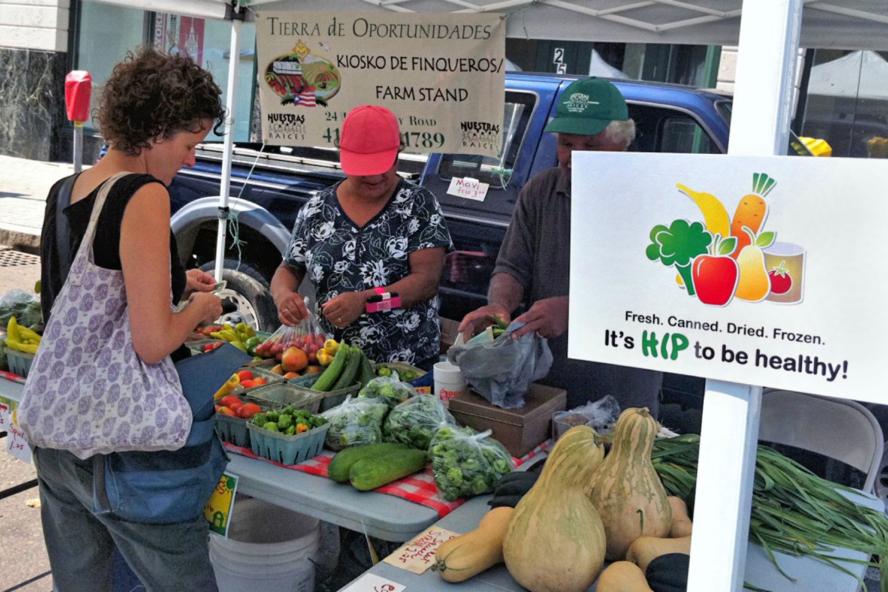
Evaluating the Economic Impacts of the Massachusetts Healthy Incentives Program (HIP) among SNAP Households and Vendors in Boston
Partners: Helene Vilme (Tufts Friedman School), Kristina Racek Pechulis (Community Co-Lead, Massachusetts Food Systems Collaborative), Rebecca Miller (Policy Co-Lead, Massachusetts Food Systems Collaborative), Sage Loomis & Andrew Bassuk (Tufts student RAs)
Abstract: The Massachusetts Healthy Incentives Program (HIP) provides point-of-sale incentives to increase fruit and vegetable purchases among Supplemental Nutrition Assistance Program (SNAP) households. However, participation remains low, and its economic impacts are understudied in high-cost urban communities such as Boston. In response to urgent priorities identified by the Massachusetts Food Systems Collaborative (MAFSC), this one-year pilot study (2026–2027) utilizes a Community-Based Participatory Research approach to co-design an evaluation of HIP’s impact and accessibility. Together, a collaborative team of Tufts faculty, students, and MAFSC partners will examine how HIP participation shapes household food purchasing power and budget flexibility, while also assessing vendor economic outcomes such as revenue stability and local reinvestment. Using a convergent parallel mixed-methods design, the team will integrate survey data from SNAP participants (n=50, including both HIP users and eligible non-users) with semi-structured interviews with local vendors (n=8–12). Findings will generate community-centered, actionable recommendations to improve program usability, outreach, and vendor coordination. Dissemination will occur through co-developed policy briefs and presentations to SNAP participants, vendors, and program administrators to support program refinement and expansion.
Healing in Place: Co-Designing a Community Nature Rx Pathway in Dorchester
Partners: Judith Foster (HERO), James Intriligator (Tufts Engineering), Justin Hollander (Tufts UEP), Sophie Coe, Lina Jeffers, Mark Schaffler, Lucy Zimmerman (Tufts students)
Abstract: H.E.R.O. Nurturing Center is a Dorchester-based community healing organization that uses guided Nature Healing Walks and neighborhood "oasis" spaces to support stress relief, connection, and emotional restoration. This community-engaged research project will bring together H.E.R.O., Tufts faculty, and Tufts students to co-design and pilot a practical Nature Rx pathway for Dorchester residents — focusing on the operational layer between referral and sustained participation. The work will examine how people move from first invitation to attendance and return, and how specific routes, meeting points, and neighborhood green spaces shape perceived safety, restoration, and belonging. Deliverables will include a service blueprint, first-time participant onboarding materials, route and site audit tools, facilitator and partner materials, lightweight evaluation measures, and a pilot report to support future implementation, policy work, and funding.
The Digital Plate: Enhancing Digital Literacy around Healthy Eating for Latino/a/e/x Older Adults in Boston
Partners: Iriana Morales (Inquilinos Boricuas en Acción), May May Leung (Tufts Friedman School), Ana Maafs-Rodríguez (Tufts Friedman School)
Abstract: Latino/a/e/x older adults often face significant barriers in navigating the digital health and nutrition environment, which can limit their access to essential information regarding healthy eating. Despite the proliferation of online resources, digital literacy gaps and a lack of culturally tailored content hinder effective engagement within this demographic. This project, a collaboration between Inquilinos Boricuas en Acción and the Friedman School of Nutrition Science and Policy, uses a mixed methods research design to develop and evaluate a culturally and technically relevant peer-to-peer education workshop and digital toolkit designed to improve digital literacy around healthy eating among Latino/a/e/x older adults in Boston. By leveraging peer-to-peer education and community-led design, this project seeks to produce a validated, community-owned curriculum and toolkit and a scalable model for reducing nutrition-related health disparities by empowering Latino/a/e/x older adults to navigate the modern digital landscape for improved nutritional health.