Tufts Center for Civic AI
The word “civic” refers to how human beings govern themselves in all kinds of contexts, not only governments and democratic systems but also groups and organizations, communities, movements, professions, and networks. Anything is “civic” if it helps people to make decisions, manage resources, and otherwise govern themselves.
The Center will build and study AI tools that support these forms of self-governance in practice. Our approach will be both constructive—applying AI to strengthen self-governance—and critical, recognizing the risk that AI systems can displace human judgment or shift authority away from people and institutions toward privately controlled technologies. This tension makes the positive agenda of developing civic AI tools both necessary and urgent.
Faculty
The Center is led by two Co-Directors and supported by professional staff and core faculty from departments and disciplines across the university.
Co-Directors
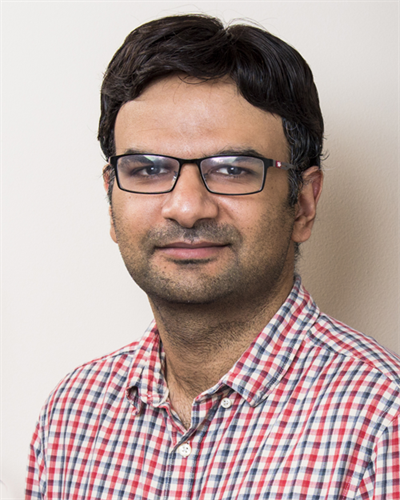

Peter Levine
Associate Dean of Academic Affairs and Lincoln Filene Professor of Citizenship & Public Affairs, Tisch College
Affiliated Faculty
School of Arts and Sciences
Keren Ladin
Professor, Community Health
Mat Rappaport
Professor of the Practice, Film & Media Studies
School of Engineering
James Intriligator
Professor of the Practice, Mechanical Engineering
Valencia Koomson
Professor, Electrical and Computer Engineering
Kevin Oye
Professor of the Practice, Tufts Gordon Institute
Executive Director, Tufts Gordon Institute
Director of the M.S. in Innovation and Management Program
Deborah Sunter
Associate Professor, Civil and Environmental Engineering
The Fletcher School
Alnoor Ebrahim
Thomas Schmidheiny Professor of International Business, The Fletcher School
The Gerald J. and Dorothy R. Friedman School of Nutrition Science and Policy
Elena Naumova
Professor, Friedman School
Chair of the Division of Nutrition Data Science, Friedman School
Jonathan M. Tisch College of Civic Life
Ahmmad Brown
Professor of the Practice, Tisch College
Samantha Fried
Associate Director of Civic Studies, Tisch College
Tufts University School of Medicine
Thomas Stopka
Professor, Public Health and Community Medicine, Tufts University School of Medicine
Three Pillars
The Center will pursue its mission through three interconnected pillars, representing ongoing and future projects:
-
Labs will design, study, evaluate, and deploy AI systems with a strong emphasis on co-design with community and civic partners. Illustrative areas include AI for civic engagement, AI in education, AI in healthcare and accessibility, and AI in developing regions.
-
Educational pathways will include a Civic AI Minor, with potential future development of a Master’s program and major. The minor will integrate technical AI coursework with civic studies and project-based learning.
-
Outward-facing activities will include a Civic Leaders-in-Residence Program, Civic AI Workshops for civic leaders, and AI-for-All Seminars providing community-facing AI literacy and governance conversations.